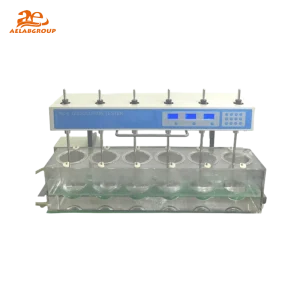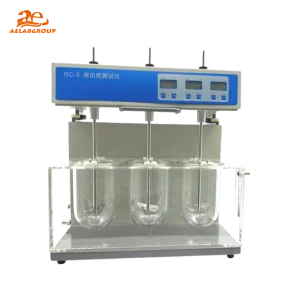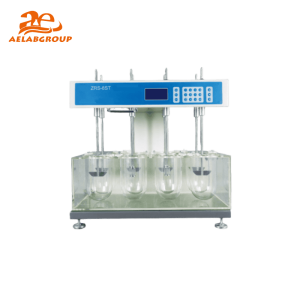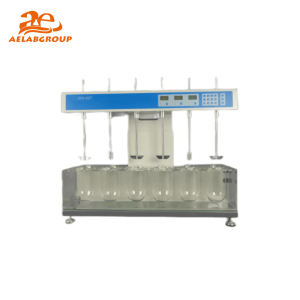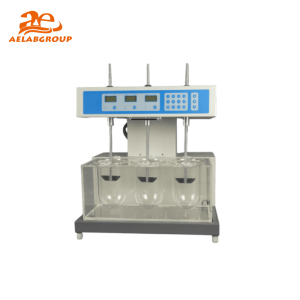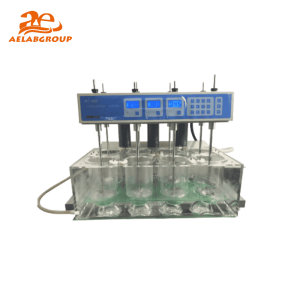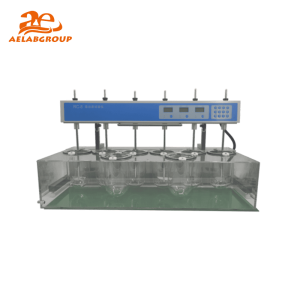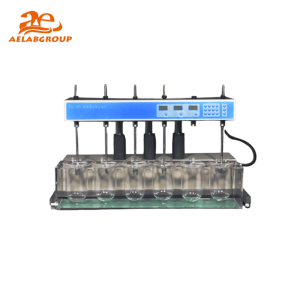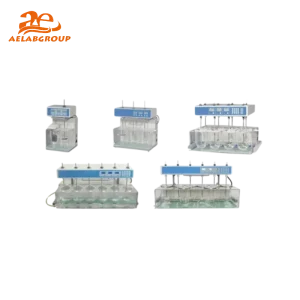
AELAB | Pharmaceutical Equipments | Dissolution Tester
A Dissolution Tester is a critical pharmaceutical quality-control instrument used to measure how quickly an active ingredient releases from tablets or capsules into a medium. Understanding Dissolution Tester performance supports drug formulation, regulatory approval, and patient safety.
A Dissolution Tester measures the rate at which an API dissolves from its dosage form into a solvent under standardized, physiologically relevant conditions. Typical systems include vessels with dissolution medium, rotating paddles or baskets for agitation, precise temperature control at ~37 °C, and a sampling system that withdraws aliquots at defined timepoints for generating dissolution profiles used in formulation, bioequivalence, and regulatory submissions.
| Feature | Details |
|---|---|
| Apparatus Types | USP 1 (Basket), USP 2 (Paddle), USP 3 (Reciprocating Cylinder), USP 4 (Flow-Through Cell) |
| Agitation Speed | Programmable RPM per method; stable, low-vibration drive |
| Temperature Control | Heated bath or individual heaters targeting ~37 °C with tight accuracy |
| Vessel Capacity | Typically hundreds of mL to ~1 L media per vessel (method dependent) |
| Sampling System | Manual cannulas or automated sampling with timed filtration and optional cooling |
| Stations / Vessels | Multi-vessel configuration (commonly 6–8) for parallel testing |
| Materials of Construction | Borosilicate glass vessels; 316L stainless steel paddles/baskets; chemically resistant tubing |
| Compliance & Data | Supports pharmacopeial methods; method programming, data logging, and report export |
| Aspect | Dissolution Tester | Disintegration Tester |
|---|---|---|
| What It Measures | Rate of API release into the medium over time | Time for dosage form to break apart |
| Primary Output | Dissolution curve (% release vs. time) | Single disintegration time endpoint |
| Typical Application | Bioavailability prediction, bioequivalence, formulation development | Preliminary QC prior to dissolution testing |
| Method Complexity | Higher—requires media selection, RPM, temperature, sampling | Lower—focus on mechanical breakup under set conditions |
| Regulatory Role | Essential for regulatory submissions and routine QC | Supportive QC to confirm dosage integrity |
Q: Why is dissolution testing required for oral dosage forms?
A: It verifies bioavailability and bioequivalence, supports batch consistency, and satisfies regulatory expectations from agencies such as FDA, USP, and EMA.
Q: Which USP apparatus should I choose?
A: Use baskets (USP 1) for capsules/floating forms, paddles (USP 2) for most tablets, reciprocating cylinders (USP 3) for modified-release, and flow-through cells (USP 4) for poorly soluble or transdermal products.
Q: What parameters most affect dissolution results?
A: Agitation speed (RPM), temperature accuracy near 37 °C, medium volume and composition/pH, sampling timepoints, and consistent dosage placement.
Q: How can I reduce variability between runs?
A: Calibrate regularly, use deaerated media, standardize procedures and sampling, and avoid cross-contamination with dedicated tools.
Q: Are certain brands commonly used in industry?
A: Commonly used manufacturers include Agilent Technologies, Electrolab, ERWEKA, Hanson Research, and Sotax; select based on compliance, scalability, automation, and support.
Looking for specific lab equipment? Fill out the form below, and our team will get back to you with detailed information and a personalized quote.