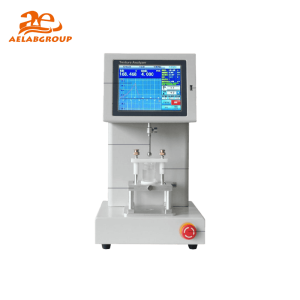
AELAB | Pharmaceutical Equipments | Texture Analyzer
A Texture Analyzer is a precision instrument used to measure the mechanical and physical properties of materials like hardness, adhesiveness, and elasticity. Texture analysis helps ensure product consistency, quality, and performance across food, pharmaceutical, cosmetic, and packaging industries. Understanding how a texture analyzer works is essential for R&D, production, and quality control professionals aiming for precise, repeatable texture data.
A Texture Analyzer, also known as a texture analysis machine or food texture tester, quantifies material characteristics like hardness, chewiness, and cohesiveness by applying controlled force and recording response curves. Through compression, tension, or penetration tests, it provides objective, reproducible measurements crucial for sensory validation and process optimization.
| Feature | Details |
|---|---|
| Load Capacity | Ranges from 1 N to 500 N depending on model and material hardness |
| Speed Range | 0.01–500 mm/min adjustable movement speed |
| Resolution | High sensitivity; typically ±0.1% of full scale |
| Test Modes | Compression, Tension, Adhesion, Penetration, Flexure |
| Probes and Fixtures | Cylindrical, cone, ball, blade, or custom geometries |
| Software Features | Force–distance/time graphing, batch automation, export in CSV/PDF |
| Data Interface | USB, RS232, or Ethernet for direct data acquisition |
| Compliance | Conforms to ASTM and ISO standards for texture analysis |
| Aspect | Texture Analyzer | Universal Testing Machine | Rheometer |
|---|---|---|---|
| Primary Use | Soft materials: food, pharma, cosmetics | Hard materials: metals, plastics | Fluids: viscosity and flow behavior |
| Force Range | Low–medium (1–500 N) | High (kN range) | Minimal force |
| Precision | High for delicate textures | High for tensile/compressive strength | High for fluid flow |
| Application Focus | Sensory & mechanical texture testing | Material strength and durability | Viscosity and rheology |
| Output Data | Force vs. distance/time curves | Stress–strain graphs | Viscosity vs. shear rate curves |
Q: What does a texture analyzer measure?
A: It measures the mechanical properties of materials such as hardness, chewiness, elasticity, and adhesiveness through controlled force application and response recording.
Q: What industries use texture analyzers?
A: They are used in food, pharmaceuticals, cosmetics, packaging, and material science for R&D and quality control purposes.
Q: How is a texture analyzer different from a rheometer?
A: A texture analyzer measures solid or semi-solid mechanical texture properties, while a rheometer focuses on fluid viscosity and flow behavior.
Q: What maintenance does a texture analyzer require?
A: Regular calibration, probe cleaning, lubrication, and system checks maintain long-term precision and reliability.
Q: Can a texture analyzer be automated?
A: Yes. Most modern models include programmable sequences, auto-calibration, and software integration for batch testing and data management.
Looking for specific lab equipment? Fill out the form below, and our team will get back to you with detailed information and a personalized quote.