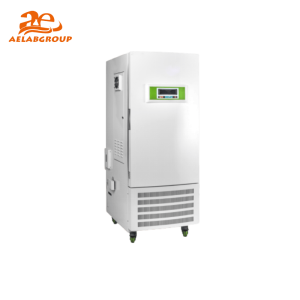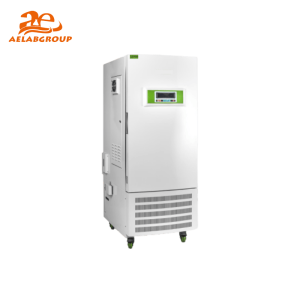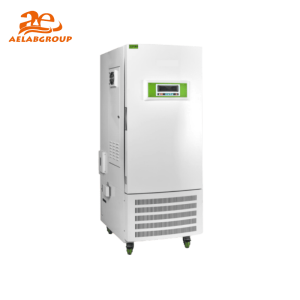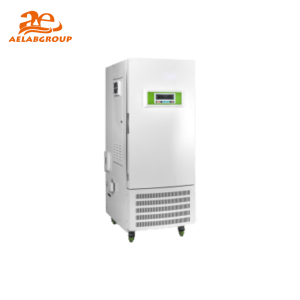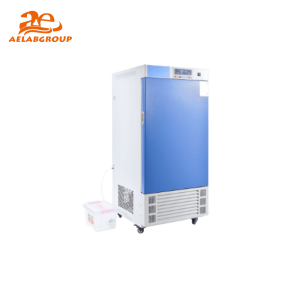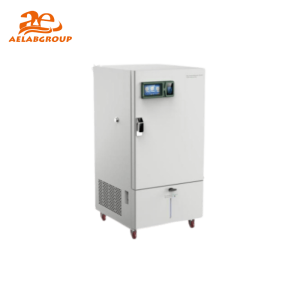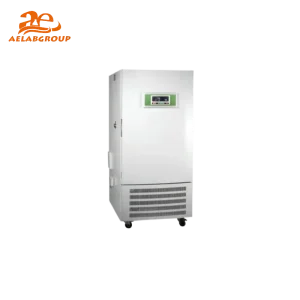
AELAB | Themostat Equipment | Constant Temp & Humidity Chamber
A Constant Temperature & Humidity Chamber provides stable, repeatable environmental conditions for precision testing across pharmaceuticals, electronics, aerospace, and materials research. By tightly controlling temperature and relative humidity, a Constant Temperature & Humidity Chamber helps teams validate product performance and meet global compliance standards.
A Constant Temperature & Humidity Chamber—also called a climatic or environmental test chamber—is a laboratory/industrial enclosure that simulates specific temperature and humidity conditions for product reliability, accelerated aging, and stability studies. Using PID-controlled heating/cooling, active humidification/dehumidification, and uniform air circulation, it maintains precise set points for long durations to support ISO/ASTM/IEC-driven protocols.
| Feature | Details |
|---|---|
| Temperature Range | −70 °C to +180 °C (model-dependent) |
| Humidity Range | 10%–98% RH with active humidification/dehumidification |
| Stability & Uniformity | Temperature fluctuation typically ±0.3 °C to ±0.5 °C; humidity deviation ±2% RH |
| Control System | PID controllers with touchscreen programming, profiles, alarms |
| Sensors | High-precision PT100 temperature sensor and capacitive humidity sensor |
| Air Circulation | High-performance fans to eliminate hot/cold spots |
| Test Volume | ≈50 L to 2,000 L standard; custom sizes available |
| Data & Connectivity | USB/Ethernet export, data logging for compliance documentation |
| Safety Features | Overheat/overcool protection, door interlocks, fail-safe shutdown |
| Aspect | Constant Temp & Humidity Chamber | Standard Temp Chamber |
|---|---|---|
| Humidity Control | Yes (10%–98% RH with ±2% RH stability) | No humidity regulation |
| Use Cases | Electronics, pharma, materials aging, packaging | General thermal testing only |
| Control Accuracy | High for both temperature and RH | High for temperature only |
| Temperature Range | −70 °C to +180 °C | Similar thermal range (model-dependent) |
| Price | Higher (added humidity systems) | Lower |
Q: What is a constant temperature and humidity chamber used for?
A: It simulates controlled climatic conditions to test performance, reliability, and aging of products and materials—commonly in electronics, pharmaceuticals, aerospace, and packaging.
Q: How is humidity maintained accurately?
A: Chambers use steam generators, ultrasonic humidifiers, or dehumidifiers with closed-loop RH sensors to hold set points within about ±2% RH.
Q: What sensor types are typical?
A: PT100 RTDs for temperature and capacitive or chilled-mirror sensors for humidity, paired with PID controllers for tight regulation.
Q: How often should the chamber be calibrated?
A: Many labs calibrate quarterly; follow internal SOPs and regulatory guidance, and always verify before critical studies.
Q: What should I consider before buying?
A: Define temperature/RH range, test volume, data logging and alarm needs, energy usage, footprint, and service/warranty support.
Looking for specific lab equipment? Fill out the form below, and our team will get back to you with detailed information and a personalized quote.