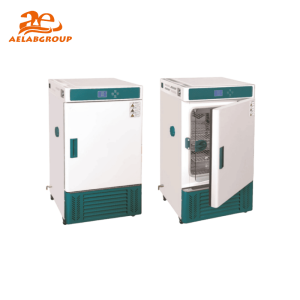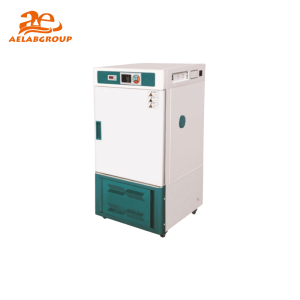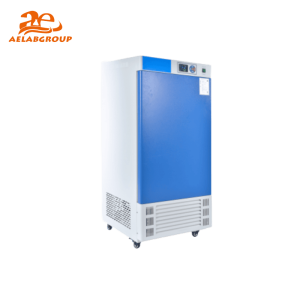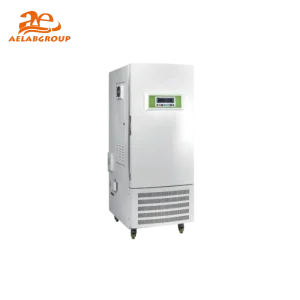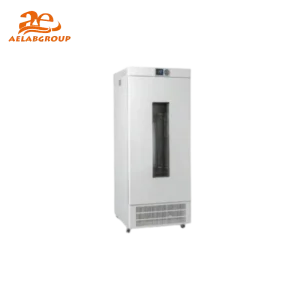
AELAB | Themostat Equipment | Cooling/Light Incubator
A Cooling/Light Incubator delivers precise temperature and programmable illumination to replicate natural environmental conditions for plant growth, seed germination, and phototrophic microbial studies. By uniting cooling, heating, and lighting in one chamber, a Cooling/Light Incubator ensures reproducible results for light-sensitive and temperature-dependent experiments.
A Cooling/Light Incubator is a laboratory instrument that simulates day–night cycles and seasonal conditions by combining active cooling/heating with programmable light control. Typical systems offer a 5°C–60°C temperature range with PID regulation, adjustable light intensity and photoperiods, and uniform airflow—making them ideal for plant biology, tissue culture, seed testing, and microbial light-response research.
| Feature | Details |
|---|---|
| Temperature Range | 5°C to 60°C (cooling & heating) |
| Temperature Stability/Uniformity | ±0.5°C or better with PID control; fan-assisted airflow |
| Light Source & Range | LED/fluorescent/full-spectrum; 0–20,000 lux (model-dependent) |
| Photoperiod Programming | Fully programmable day/night cycles (e.g., 12h/12h) with dimming |
| Cooling Technology | Peltier or compressor-based systems for rapid recovery |
| Humidity & Airflow | Optional humidity modules; directed airflow for uniform light/temperature |
| Chamber Volume | Typically 150–500+ L with adjustable shelving |
| Controls & Data | Touchscreen interface, alarms, and data logging (USB/Wi-Fi options) |
| Aspect | Cooling/Light Incubator | Standard Incubator |
|---|---|---|
| Temperature Range | 5°C–60°C with active cooling | ~25°C–70°C, heating only |
| Light Control | Programmable intensity & spectrum | None |
| Photoperiod Programming | Yes (day/night cycles) | No |
| Applications | Plant growth, seed testing, phototrophic microbes | General incubation tasks |
| Cost | Higher (advanced controls) | Lower to moderate |
Q: What experiments benefit most from a Cooling/Light Incubator?
A: Seed germination, plant circadian studies, algae cultivation, and microbial light-response assays that require synchronized temperature and light cycles.
Q: What light intensity is typical for plant studies?
A: Many protocols use 2,000–10,000 lux, while some growth or algae applications may require higher levels; choose models rated up to ~20,000 lux or more as needed.
Q: How do I prevent uneven lighting across shelves?
A: Use reflective interiors, adjust shelf height, avoid overcrowding, and verify with a light meter at multiple points before starting experiments.
Q: Can it control humidity?
A: Some models include humidity modules; if your protocol is humidity-sensitive, select a unit with active humidity control and monitoring.
Q: Is Peltier or compressor cooling better?
A: Peltier systems are quiet and energy-efficient for moderate loads; compressor systems offer faster pull-down and better performance for larger chambers or higher heat loads.
Looking for specific lab equipment? Fill out the form below, and our team will get back to you with detailed information and a personalized quote.