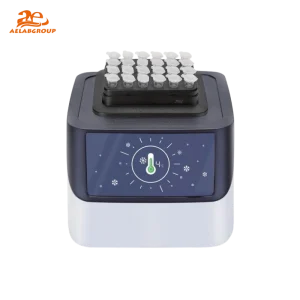
AELAB | Themostat Equipment | Ice Maker/Freezer | Ice Maker
An Ice Maker is a machine designed to automatically produce ice cubes or flakes, offering a reliable and hygienic supply of ice for various settings. From households and restaurants to laboratories and commercial facilities, ice makers provide the convenience of on-demand ice production, ensuring consistent cooling for beverages, samples, and perishables.
| Feature | Specification |
|---|---|
| Ice Type | Cube, Flake, or Nugget |
| Production Capacity | 10–100 kg per 24 hours (model dependent) |
| Storage Capacity | 2–50 kg of ice |
| Operating Temperature | 0°C to -5°C |
| Power Supply | AC 220–240V, 50/60 Hz |
| Material | Stainless Steel and Food-Grade Plastic |
| Cooling System | Air-cooled or Water-cooled |
| Control Interface | Digital or mechanical control panel |
Q: How does an ice maker work?
A: The machine draws water from a connected supply, freezes it into cubes or flakes, and automatically releases the ice into a storage bin when complete.
Q: How often should I clean my ice maker?
A: Regular cleaning every 1–2 weeks is recommended to prevent bacteria and mineral buildup, especially in high-usage environments.
Q: Can I choose different ice shapes?
A: Yes, most ice makers allow you to select from cube, flake, or nugget ice depending on the model and intended use.
Q: What’s the difference between a commercial and household ice maker?
A: Household models are compact with smaller production capacities, while commercial units are larger, produce ice continuously, and are built for heavy-duty operation.
Looking for specific lab equipment? Fill out the form below, and our team will get back to you with detailed information and a personalized quote.