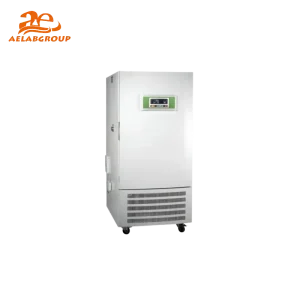
AELAB | Themostat Equipment | Stability Testing Chamber
A Stability Testing Chamber provides precise environmental control for evaluating the long-term quality and performance of products. Used extensively in pharmaceutical, cosmetic, and food industries, a Stability Testing Chamber ensures compliance with international stability protocols by maintaining consistent temperature, humidity, and light conditions over time.
A Stability Testing Chamber, also known as a stability or environmental chamber, is designed to simulate various climatic conditions for testing the shelf life, degradation, and overall stability of products. It precisely regulates temperature, humidity, and lighting to meet industry standards such as ICH Q1A(R2), FDA, and GMP. These chambers are essential in R&D, production quality control, and regulatory validation processes across pharmaceuticals, cosmetics, food, and materials testing.
| Feature | Details |
|---|---|
| Temperature Range | 10°C to 60°C (expandable range on request) |
| Humidity Range | 20% to 90% RH (precision ±2% RH) |
| Lighting | UV and visible light system for ICH Q1B photostability testing |
| Controllers | Microprocessor or PLC-based digital PID controller |
| Sensors | PT100 RTD and capacitive humidity sensors |
| Compliance | ICH Q1A(R2), FDA, GMP, GLP |
| Capacity | From 50 L to walk-in scale (customizable) |
| Data Logging | USB/Ethernet connectivity with real-time monitoring |
| Aspect | Stability Chamber | Incubator |
|---|---|---|
| Humidity Control | Yes (20–90% RH) | Limited or none |
| Light Exposure | Optional UV/visible lighting for photostability | No lighting system |
| Long-Term Testing | Designed for extended duration | Short-term culture incubation |
| Regulatory Use | ICH/FDA/GMP compliance | General lab use |
| Application Scope | Pharma, cosmetics, food, materials | Microbial and cell growth |
Q: What is a stability testing chamber used for?
A: It is used to test how products perform under specific temperature, humidity, and light conditions to assess their shelf life and compliance with regulatory standards.
Q: What environmental conditions are commonly used in stability testing?
A: Standard conditions include 25°C/60% RH for long-term, 40°C/75% RH for accelerated, and 30°C/65% RH for intermediate testing, per ICH guidelines.
Q: What’s the difference between a stability chamber and a constant temperature chamber?
A: A stability chamber includes both humidity and optional lighting control, whereas a constant temperature chamber focuses on temperature stability only.
Q: How do I maintain calibration accuracy?
A: Schedule routine calibration every 3–6 months using certified reference instruments, and verify readings before each test cycle.
Q: Can stability chambers perform photostability tests?
A: Yes, models equipped with UV and visible light sources conforming to ICH Q1B can perform photostability testing for light-sensitive products.
Looking for specific lab equipment? Fill out the form below, and our team will get back to you with detailed information and a personalized quote.