AELAB | Water Testing Equipment | Jar Tester/Turbidity Meter | Benchtop Turbidity Meter
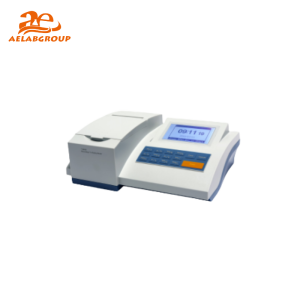
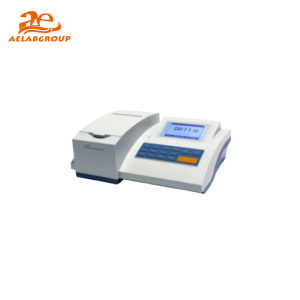
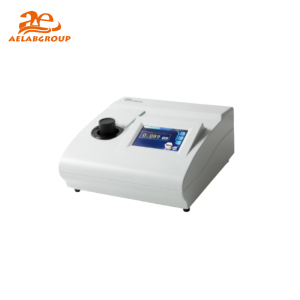
A Benchtop Turbidity Meter measures the turbidity (cloudiness) of liquid samples caused by suspended particles that scatter light. It delivers precise, repeatable readings for assessing water quality, clarity, and contamination in controlled lab settings. Common users include water treatment plants, environmental monitoring programs, breweries, and analytical laboratories.
A Benchtop Turbidity Meter is an analytical instrument that quantifies the intensity of light scattered by particles in a liquid, reporting results in NTU (Nephelometric Turbidity Units) or FNU (Formazin Nephelometric Units). By stabilizing the sample and optics on a bench, these instruments minimize vibration and temperature drift, enabling more accurate turbidity measurements for water quality and process control.
| Feature | Details |
|---|---|
| Measurement Principle | Nephelometric 90° light scatter; some models include ratio or backscatter optics for improved linearity |
| Light Source | Infrared LED (ISO 7027) or tungsten filament lamp (EPA 180.1), depending on method |
| Measurement Range | Typical 0–1000 NTU (low-range options down to 0.01 NTU; high-range options available) |
| Resolution & Accuracy | Resolution to 0.01 NTU; accuracy commonly ±2% of reading or ±0.01 NTU (whichever is greater) |
| Calibration | Multi-point with formazin or AMCO-AEPA-1 standards; user prompts and stability checks |
| Cuvette Compatibility | Commonly 25 mm round vials; includes indexing marks and dust caps to reduce stray light |
| Data Handling | Onboard data logging, USB or RS-232 export; GLP/GMP time-stamps on many benchtop models |
| Compliance | Methods aligned to ISO 7027 (IR) and/or EPA 180.1 (tungsten) for regulatory reporting |
| Aspect | Benchtop Turbidity Meter | Portable Turbidity Meter |
|---|---|---|
| Precision | Higher precision with stable optics and temperature control | Good precision; optimized for field robustness |
| Use Environment | Laboratory bench; controlled conditions | Field measurements; on-site sampling |
| Features | Advanced calibration, data logging, ratio optics | Battery-powered, compact, simplified interface |
| Throughput | Ideal for high sample throughput and QC labs | Ideal for rapid spot checks and surveys |
| Compliance | Often supports ISO 7027/EPA 180.1 reporting | Varies by model; field-ready compliance options |
Q: What units does a Benchtop Turbidity Meter report?
A: Most meters report in NTU (Nephelometric Turbidity Units) or FNU when using infrared light per ISO 7027.
Q: How often should I calibrate the instrument?
A: Calibrate on a routine schedule (e.g., daily or weekly based on workload) and after lamp replacement, major transport, or when QC checks deviate.
Q: Can I measure very clear drinking water?
A: Yes—choose a model with low-range capability (resolution to 0.01 NTU) and use clean, indexed cuvettes to minimize stray light effects.
Q: Do benchtop meters work for brewery applications?
A: They are widely used for beer haze and process water clarity; ratio optics help with diverse particle sizes from proteins and yeast.
Looking for specific lab equipment? Fill out the form below, and our team will get back to you with detailed information and a personalized quote.