AELAB | Water Testing Equipment | Jar Tester/Turbidity Meter | Portable Turbidity Meter
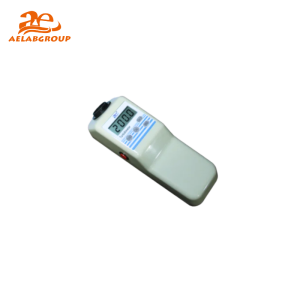
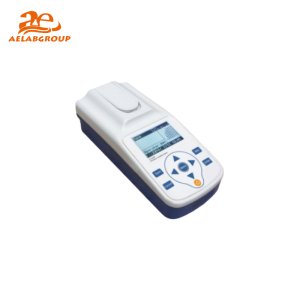
A Portable Turbidity Meter measures the cloudiness or turbidity of liquids directly in the field. It provides fast, accurate readings of suspended particle levels, making it ideal for on-site water quality testing, environmental monitoring, and industrial process control.
A Portable Turbidity Meter is a handheld analytical device designed to assess the clarity of water or other transparent liquids by detecting scattered light from suspended solids. Compact and battery-powered, it allows operators to perform turbidity measurements outside the laboratory, ensuring reliable data for immediate decision-making in the field.
| Feature | Details |
|---|---|
| Measurement Principle | Nephelometric 90° light scatter detection (NTU or FNU units) |
| Light Source | Infrared LED (ISO 7027) or tungsten lamp (EPA 180.1) |
| Measurement Range | Typically 0–1000 NTU, with high- and low-range options |
| Accuracy | ±2% of reading or ±0.1 NTU |
| Power Supply | Rechargeable or replaceable batteries for field use |
| Display | Backlit digital LCD with stability indicator |
| Calibration | Single or multi-point calibration with standard solutions |
| Data Logging | Memory for 100–500 readings; USB or Bluetooth connectivity |
| Aspect | Portable Turbidity Meter | Benchtop Turbidity Meter |
|---|---|---|
| Design | Compact and battery-operated for fieldwork | Larger, AC-powered unit for lab environments |
| Precision | Moderate to high accuracy suitable for on-site testing | High precision with temperature-stable optics |
| Calibration | Quick field calibration options | Multi-point, lab-based calibration procedures |
| Portability | Highly portable and weather-resistant | Stationary, not intended for outdoor use |
| Best Use | Field testing, environmental surveys, quick checks | Laboratory analysis, quality assurance, regulatory work |
Q: What units does a portable turbidity meter display?
A: Results are typically shown in NTU (Nephelometric Turbidity Units) or FNU, depending on the light source standard used.
Q: Can it be used for drinking water testing?
A: Yes, most models can measure very low turbidity levels suitable for drinking water quality checks.
Q: How long do the batteries last?
A: Depending on usage, a full charge or new set of batteries typically lasts 500–1000 measurements.
Q: Is it waterproof?
A: Many portable turbidity meters are splash- or waterproof (IP67 rated) for fieldwork in wet conditions.
Looking for specific lab equipment? Fill out the form below, and our team will get back to you with detailed information and a personalized quote.