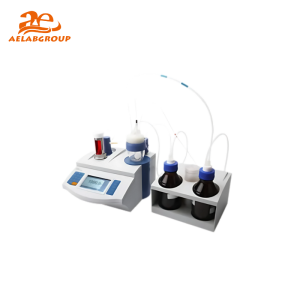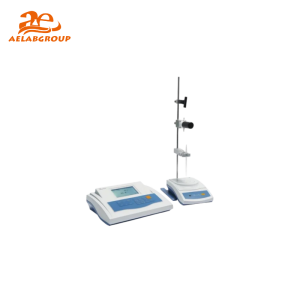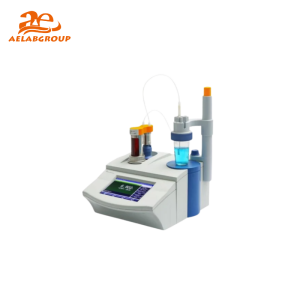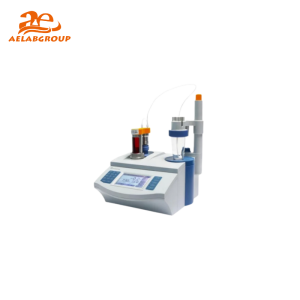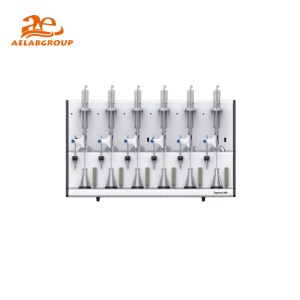
AELAB | Water Testing Equipment | Karl Fischer/Coulometric Titrator
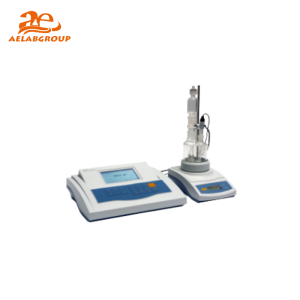
A Karl Fischer Coulometric Titrator is an essential analytical instrument for precise moisture analysis across industries such as pharmaceuticals, food, chemicals, and petrochemicals. Utilizing the Karl Fischer titration method, it delivers fast, reproducible, and highly accurate results for samples with low moisture content.
A Karl Fischer Coulometric Titrator determines water content by measuring the electrochemical reaction between iodine and water. The instrument generates iodine in situ, eliminating the need for large reagent volumes and allowing precise detection of even trace levels of moisture. It is particularly suitable for small samples and critical quality control tasks in research and industrial laboratories.
| Feature | Details |
|---|---|
| Measurement Principle | Electrochemical generation of iodine reacting with water in the sample |
| Detection Range | Typically 1 µg to 10 mg H₂O (trace moisture analysis) |
| Accuracy | ±0.3 µg H₂O or ±1% of reading (depending on sample) |
| Sample Size | Ideal for small samples (typically <1% moisture) |
| Automation | Automatic titration, endpoint detection, and reagent management |
| Display | Digital LCD or touchscreen interface with data logging |
| Reagent Handling | In situ iodine generation; reduced reagent consumption |
| Connectivity | USB/RS-232 interface for PC or LIMS integration |
| Aspect | Karl Fischer Coulometric Titrator | Gravimetric Moisture Analyzer |
|---|---|---|
| Measurement Principle | Electrochemical iodine-water reaction | Mass loss by drying |
| Accuracy | High precision for trace moisture | Moderate, depends on drying uniformity |
| Sample Type | Solids, liquids, and gases | Mostly solids and pastes |
| Speed | Fast (typically under 5 minutes) | Slower (depends on heating time) |
| Interference | Specific to water molecules only | Can include volatile compounds |
| Ideal Application | Trace moisture analysis | Bulk moisture determination |
Q: What is the main advantage of Coulometric Karl Fischer titration?
A: It provides extremely accurate results for trace moisture analysis with minimal reagent use, ideal for small sample sizes.
Q: Can the Karl Fischer Coulometric Titrator analyze solids?
A: Yes, solids can be analyzed after dissolution or using an oven attachment that transfers moisture into the titration cell.
Q: How often should the titrator be calibrated?
A: Calibration should be performed daily or before each analytical series to maintain accuracy.
Q: What types of samples are suitable for this titration method?
A: It is suitable for liquids, solids, and gases with low to trace moisture levels, including oils, pharmaceuticals, and chemicals.
Looking for specific lab equipment? Fill out the form below, and our team will get back to you with detailed information and a personalized quote.