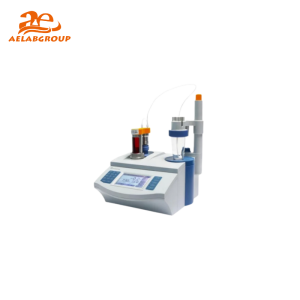
AELAB | Water Testing Equipment | Karl Fischer/Coulometric Titrator | Automatic Potential Titrator
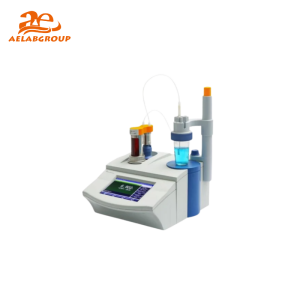
An Automatic Potential Titrator is a laboratory instrument used to determine the concentration of analytes in a solution by detecting voltage (potential) changes during titration. It automates titration steps, ensuring high precision, reproducibility, and reduced human error in applications across pharmaceuticals, food, and environmental testing.
An Automatic Potential Titrator performs titrations by monitoring the change in electrical potential between indicator and reference electrodes as titrant is added. The endpoint is automatically detected by sharp changes in voltage, allowing accurate quantification of the target analyte. This automation improves analytical throughput and consistency compared to manual titration methods.
| Feature | Details |
|---|---|
| Measurement Principle | Potential difference detection between indicator and reference electrodes during titration |
| Endpoint Detection | Automatic recognition of voltage inflection point |
| Titrant Delivery | Motorized burette with high-precision control (0.01 mL resolution) |
| Display | Digital or touchscreen LCD display showing real-time titration curve |
| Accuracy | Typically ±0.1% of reading depending on burette calibration |
| Automation | Fully automated titration with programmable methods and auto-endpoint |
| Data Management | Built-in memory, USB export, and PC connectivity |
| Compliance | Meets GLP/GMP and ISO titration standards |
| Aspect | Automatic Potential Titrator | Manual Titration |
|---|---|---|
| Precision | High, automatic endpoint detection | Dependent on operator observation |
| Speed | Fast, automated titration | Slower, manual titrant addition |
| Data Handling | Digital storage and reporting | Manual recording required |
| Reproducibility | Excellent across multiple operators | Variable between operators |
| Applications | Suitable for complex titrations and automated workflows | Simple qualitative titrations |
Q: What parameters does an automatic potential titrator measure?
A: It measures voltage (potential) changes during titration to detect the endpoint and calculate analyte concentration.
Q: What types of titrations can it perform?
A: It can perform acid-base, redox, precipitation, and non-aqueous titrations with appropriate electrodes and reagents.
Q: How is the endpoint detected?
A: The endpoint is automatically identified by a sudden change in potential recorded by the electrodes.
Q: Is calibration necessary?
A: Yes, regular calibration of electrodes and burettes ensures accuracy and reliable results.
Looking for specific lab equipment? Fill out the form below, and our team will get back to you with detailed information and a personalized quote.