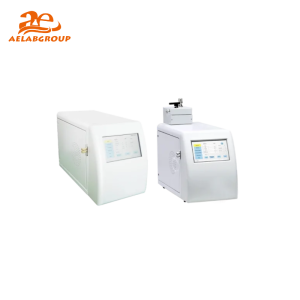
AELAB | Water Testing Equipment | Total Organic Carbon Analyzer(TOC)
Total Organic Carbon Analyzer (TOC) systems measure organic carbon to ensure water purity, safety, and regulatory compliance. These analyzers deliver rapid, sensitive results across applications from environmental monitoring to pharmaceutical production, helping teams optimize processes and meet standards.
A Total Organic Carbon Analyzer is a scientific instrument that quantifies organic carbon in a sample by oxidizing organics to carbon dioxide (CO₂) and measuring the resulting CO₂. By reporting TOC for aqueous samples (e.g., drinking water, wastewater, ultrapure water), organizations can verify cleanliness, monitor pollution, and demonstrate compliance with regulations (EPA, USP <643>, ISO, EN). Core use cases include water quality assessment, process control, and documentation for audits.
| Feature | Details |
|---|---|
| Measurement Range | Typical span from low ppb to ppm levels (model-dependent) |
| Sample Types | Aqueous: drinking water, wastewater, ultrapure water; select models for chemicals |
| Oxidation Methods | High-temperature catalytic combustion (≈680–1000 °C), UV–persulfate, chemical oxidation |
| Detection | CO₂ quantified via NDIR, conductivity, or equivalent detectors |
| Detection Limits | As low as ~0.1 ppb for high-sensitivity applications |
| Carbon Fractions/Modes | NPOC, TC, TIC workflows with optional acidification and sparging |
| Automation | Autosamplers, self-cleaning, auto-acidification, touchscreen interfaces |
| Compliance | Supports EPA, USP <643>, ISO, EN methods and reporting |
| Aspect | TOC Analyzer | BOD/COD Analyzer |
|---|---|---|
| Primary Measurement | Organic carbon content (as CO₂) | Biochemical/Chemical oxygen demand |
| Sensitivity | Very high (ppb–ppm) | Moderate |
| Speed | Rapid (minutes) | Slower (hours) |
| Typical Applications | Pharma, semiconductors, environmental water | Wastewater, sewage treatment assessment |
| Regulatory Use | Supports EPA/USP/ISO/EN compliance | Common in environmental permits and plant control |
| Data Interpretation | Direct carbon quantitation | Indirect oxygen demand proxy |
Q: What sample modes can a TOC analyzer run?
A: Common modes include NPOC (non-purgeable organic carbon), TC (total carbon), and TIC (total inorganic carbon), chosen based on matrix and reporting needs.
Q: Which oxidation method should I choose?
A: High-temperature combustion excels with challenging matrices and particulates; UV–persulfate systems are efficient for many clean water applications and can offer lower maintenance—select according to sample type and detection limits.
Q: How does TOC compare with BOD/COD?
A: TOC directly quantifies organic carbon rapidly, while BOD/COD estimate oxygen demand and usually require longer analysis times; each offers complementary insight depending on the process objective.
Q: What detection technologies are used for CO₂?
A: Most instruments use NDIR detection; some employ conductivity-based measurement or equivalent sensors depending on design and range.
Looking for specific lab equipment? Fill out the form below, and our team will get back to you with detailed information and a personalized quote.