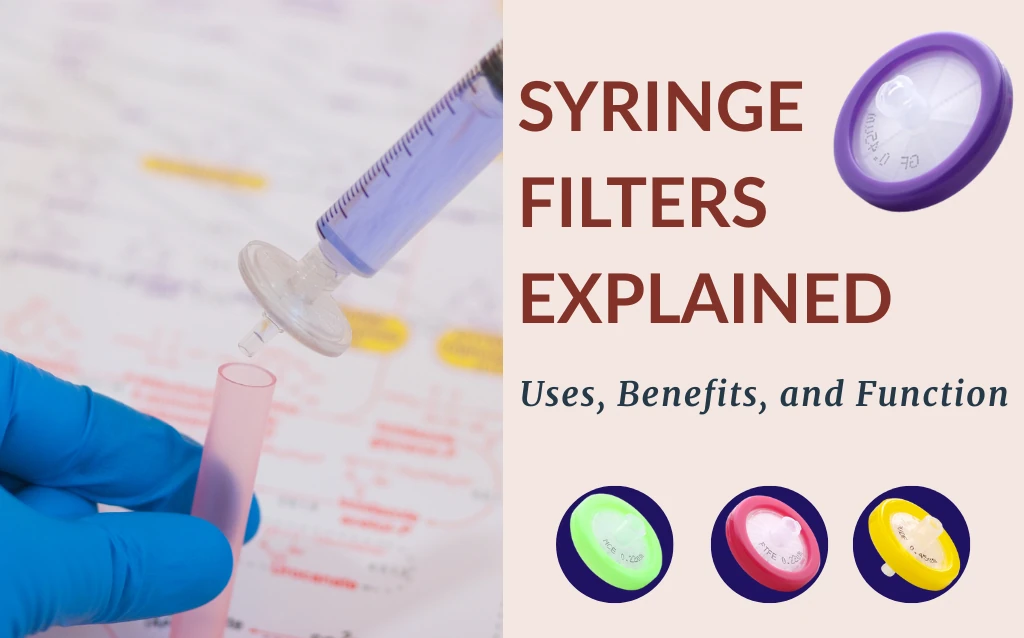
Introduction: The Critical Role of Syringe Filters in Lab Workflows
In the world of modern science, syringe filters are essential for achieving precision in every step of the workflow. Whether you’re running HPLC analyses, filtering cell cultures, or preparing injectable drugs, even the smallest contaminant can compromise your results.
This is where syringe filters play a vital role. Designed for fast and effective microfiltration, these compact tools help you achieve clear, particle-free samples — protecting your instruments, improving data quality, and ensuring safety in pharmaceutical processes.
But what exactly are syringe filters, and how do you use them properly?
What Is a Syringe Filter?
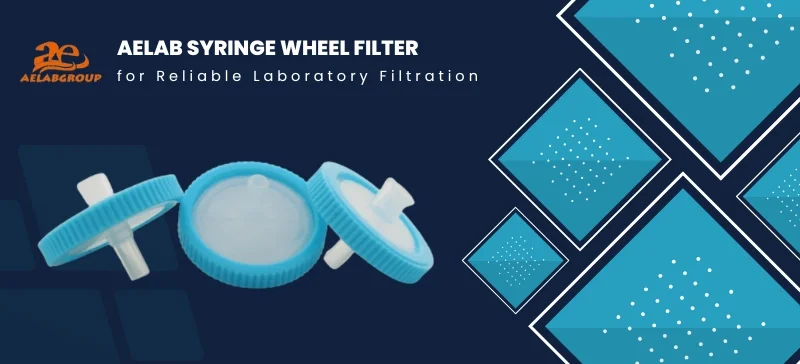
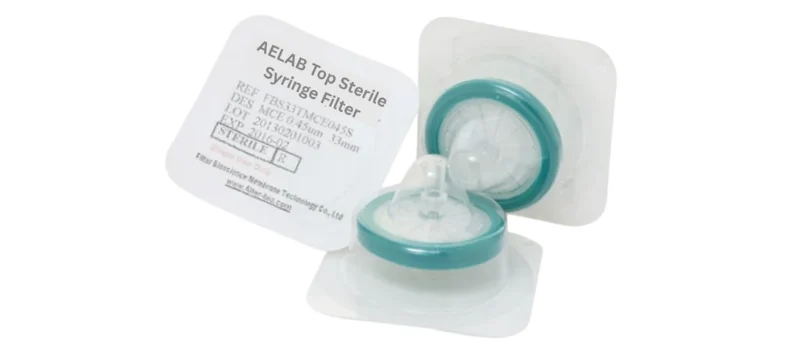
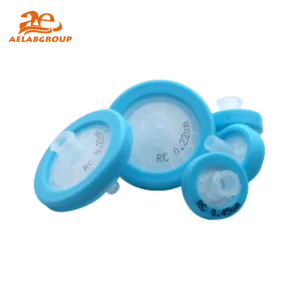
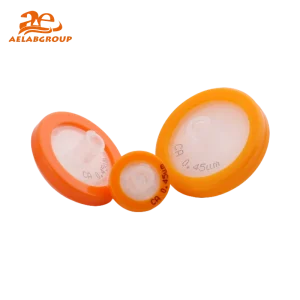
A syringe filter is a single-use filtration device attached to the tip of a syringe. It contains a microporous membrane inside a plastic housing that allows fluid to be pushed through while retaining unwanted particles, microbes, or insoluble materials.
These filters are widely used in:
Pharmaceutical production
Environmental and food testing
Life sciences and biotechnological research
They are available in various membrane materials, pore sizes, and diameters, making them suitable for a wide range of applications.
How Do Syringe Filters Work?
Syringe filters operate on the principle of size exclusion. When liquid is pushed through the filter under pressure, particles larger than the pore size are trapped by the membrane, and a purified filtrate exits through the other side.
⚙️ Filtration is unidirectional — the liquid flows from the syringe through the filter and out to the collection vessel. It cannot be drawn back.
Types of Syringe Filter Membranes
Choosing the right membrane material is critical for ensuring chemical compatibility and optimal filtration. Below are common types:
| Membrane Type | Properties | Best Used For |
|---|---|---|
| PTFE (Polytetrafluoroethylene) | Hydrophobic, solvent-resistant | Organic solvents, aggressive chemicals |
| Nylon | Hydrophilic, strong, broad compatibility | Aqueous & mixed solvents |
| PES (Polyethersulfone) | Low protein binding, fast flow | Biological samples, culture media |
| PVDF (Polyvinylidene fluoride) | Low extractables, high chemical resistance | Protein-based samples |
| Cellulose Acetate | Hydrophilic, low protein binding | Aqueous solutions, tissue culture fluids |
Pore Sizes and What They Remove
Selecting the right pore size ensures that you capture the intended contaminants without over-filtration.
| Pore Size | Use Case |
|---|---|
| 0.2 µm | Bacterial removal and sterile filtration |
| 0.45 µm | General-purpose particle removal |
| 1 µm – 5 µm | Pre-filtration for viscous or dirty samples |
👉 For HPLC filtration, 0.2 µm or 0.45 µm filters are standard to protect analytical columns and ensure clear sample injection.
Applications of Syringe Filters
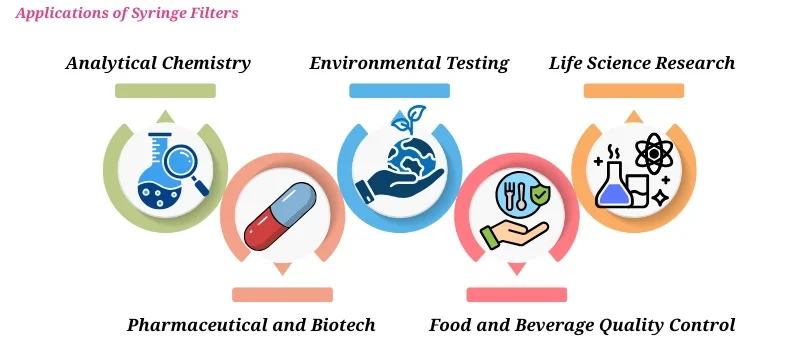
Syringe filters are indispensable in numerous scientific and industrial fields. Here’s how they’re commonly used:
Analytical Chemistry (HPLC, GC, IC)
Removes particulates that could clog columns.
Protects high-value instruments from contamination.
Pharmaceutical and Biotech
Sterilizes injectable solutions like vaccines or IV drugs.
Filters out bacteria and insoluble compounds from sensitive formulations.
Environmental Testing
Filters out debris from water, air, or soil samples before spectrometry or chromatography.
Life Science Research
Clarifies cell lysates and protein extracts.
Minimizes sample loss and ensures accurate quantification.
Food and Beverage Quality Control
Clarifies beverages such as juices, wines, and oils before microbial or chemical analysis.
How to Use Syringe Filters: A Step-by-Step Guide for Effective Filtration
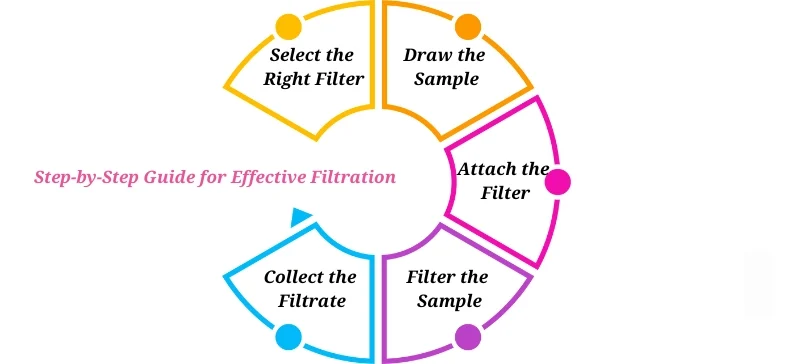
Proper technique is essential to avoid contamination or filter damage. Here’s a step-by-step guide:
1. Select the Right Filter
Material: Match to your solvent/sample.
Pore size: Based on particle size to be removed.
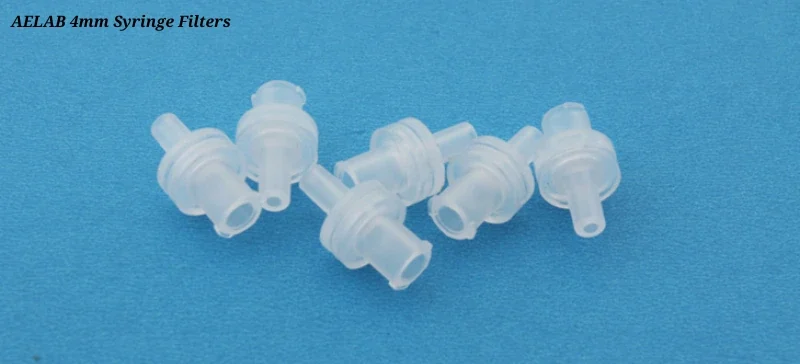
Diameter: Based on sample volume (13mm for <10 mL, 25mm for up to 100 mL).
2. Draw the Sample
Use a sterile syringe to draw the sample. Avoid air bubbles.
3. Attach the Filter
Connect the syringe filter via Luer lock or Luer slip fitting. Ensure a secure, leak-proof fit.
4. Filter the Sample
Hold the syringe upright and apply gentle, steady pressure. Do not force — excessive pressure can rupture the membrane.
5. Collect the Filtrate
Dispense the clean filtrate into a vial or sample container. Discard the used filter after one use.
⚠️ Syringe filters are single-use only. Reuse increases the risk of cross-contamination and data inaccuracy.
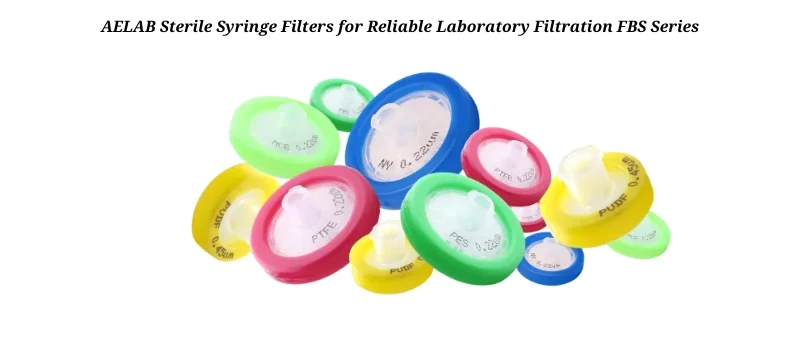
AELAB Sterile Syringe Filters for Reliable Laboratory Filtration FBS Series
To ensure success with syringe filters, follow these expert tips:
Do:
Pre-filter highly particulate samples to avoid clogging.
Store filters in a dry, clean environment.
Inspect for cracks or damage before use.
Avoid:
Reusing filters.
Using incompatible membrane materials.
Applying too much pressure.
Common Issues and Fixes:
| Problem | Possible Cause | Solution |
|---|---|---|
| Filter clogs quickly | Sample is too dirty | Use pre-filter or larger pore |
| Slow flow | Small pore or viscous sample | Dilute sample or use wider pore |
| Membrane rupture | High pressure | Filter gently |
| Leakage | Poor connection | Check Luer fitting and reattach |
Pros and Cons of Syringe Filters
| ✅ Advantages | ❌ Limitations |
|---|---|
| Easy to use | Disposable (non-reusable) |
| Fast and efficient | Can clog with dirty samples |
| Wide compatibility | Limited to small-volume filtration |
| Protects instruments | Requires proper material selection |
Conclusio
Syringe filters may be small, but their impact on your laboratory workflow is massive. From protecting sensitive instrumentation to ensuring sample sterility, they are indispensable for reliable and reproducible results.
Choosing the right syringe filter — with the correct membrane, pore size, and compatibility — ensures that your filtration process is smooth, efficient, and scientifically sound.
Ready to elevate your lab’s precision? Invest in high-quality syringe filters today for clearer samples, better results, and longer-lasting equipment.
CTA: Find the Right Syringe Filters for Your Needs
Looking for reliable syringe filters for chromatography, sterile filtration, or lab sample prep?
👉 Explore AELAB’s Syringe Filter Collection
👉 Get Expert Assistance for Filter Selection