




1. Power Failure or Failure to Start
Symptoms: No display, no sound, no movement
Causes: Disconnected power cord, blown fuse, faulty switch or wiring
Solutions:
Check and secure the power connection
Test the outlet with another device
Replace blown fuses and reset circuit breakers
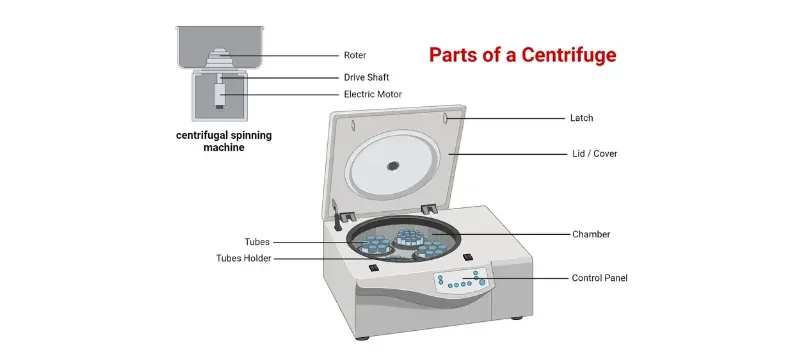
Replace faulty power switch or consult a technician for internal wiring issues
2. Excessive Vibration
Symptoms: Shaking, wobbling, strange noises
Causes: Unbalanced load, damaged rotor, uneven surface
Solutions:
Distribute samples evenly
Ensure centrifuge is placed on a level surface
Inspect and replace a worn or cracked rotor
Remove any foreign objects from the rotor chamber
3. Abnormal or Loud Noise
Symptoms: Grinding, squealing, or rattling sounds
Causes: Worn bearings, loose parts, internal debris
Solutions:
Tighten all components
Replace worn bearings
Clean the interior of the centrifuge
4. Inconsistent or Inaccurate Speed
Symptoms: Fluctuating RPM, failure to reach set speed
Causes: Motor malfunction, control panel error, tachometer failure
Solutions:
Calibrate the speed controller
Check motor performance
Replace or repair faulty sensors
5. Overheating
Symptoms: Hot surfaces, automatic shutdown
Causes: Blocked ventilation, failed cooling system, continuous use
Solutions:
Clean vents and fans
Allow cooldown intervals between cycles
Replace or repair cooling components
6. Rotor Damage
Symptoms: Cracks, unusual vibration, imbalance
Causes: Metal fatigue, improper handling or installation
Solutions:
Regularly inspect the rotor for wear
Follow correct mounting procedures
Replace damaged rotors immediately
7. Lid or Door Malfunction
Symptoms: Unable to open/close lid, lid error prevents operation
Causes: Faulty latch, broken interlock sensor, obstruction
Solutions:
Replace broken latch mechanisms
Realign or clean lid components
Check interlock system functionality

8. Error Messages or Alarms
Symptoms: Display errors, beeping alarms
Causes: Calibration faults, sensor issues, software glitches
Solutions:
Use the user manual to decode error codes
Restart the centrifuge
Contact the manufacturer if the problem persists
9. Sample Leakage or Spillage
Symptoms: Wet rotor, fluid on chamber surfaces
Causes: Overfilled tubes, cracked containers, worn seals
Solutions:
Do not overfill tubes
Use proper tube adapters
Replace damaged tubes and seals
10. Poor Sample Separation
Symptoms: Incomplete separation, mixed sample layers
Causes: Incorrect speed/time settings, unbalanced rotor, poor sample prep
Solutions:
Adjust RPM and spin time according to protocol
Ensure even tube loading
Follow recommended sample preparation steps



2 Responses
Thanks for the notes very interesting
Thanks much very educative