

1.Introduction to Centrifugal Force and Centrifuge Machines
Centrifugal force plays a critical role in various scientific, industrial, and medical applications, especially in centrifuge machines. These machines use centrifugal force to separate substances based on their density differences. This article explores how centrifugal force works, its significance in centrifuge machines, and its diverse applications across industries.
Learn more : Recirculating Chillers: How They Work, Applications, and Key Considerations
2. What is Centrifugal Force?
Centrifugal force is a fictitious force that appears to act on an object moving in a circular path. It is directed outward from the center of rotation. Although it is not a real force in classical mechanics, it is an essential concept in analyzing rotating systems, particularly in devices like centrifuges.
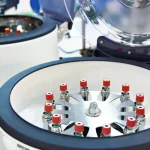
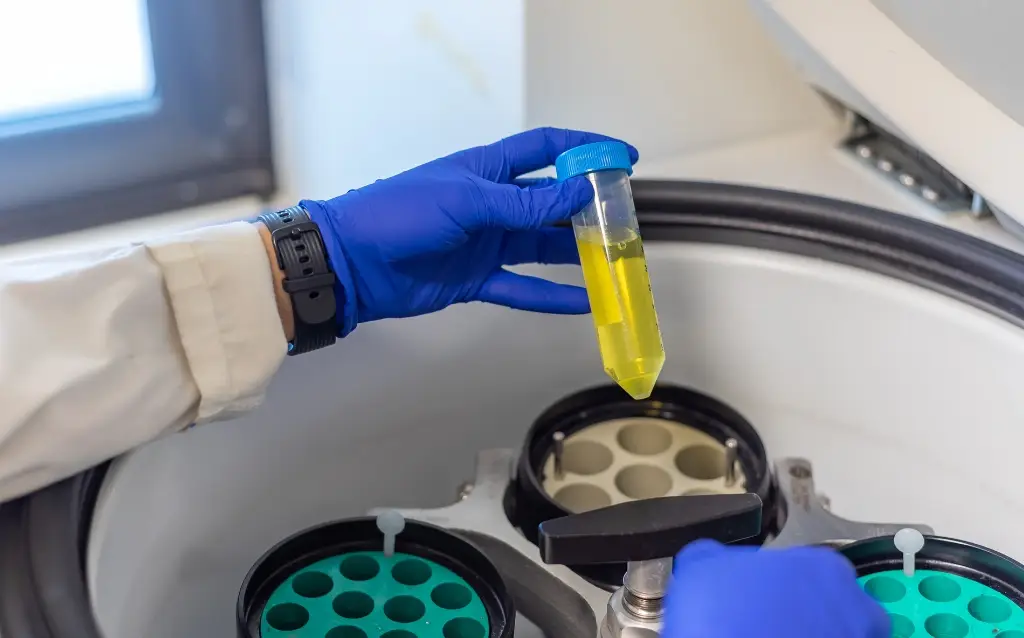
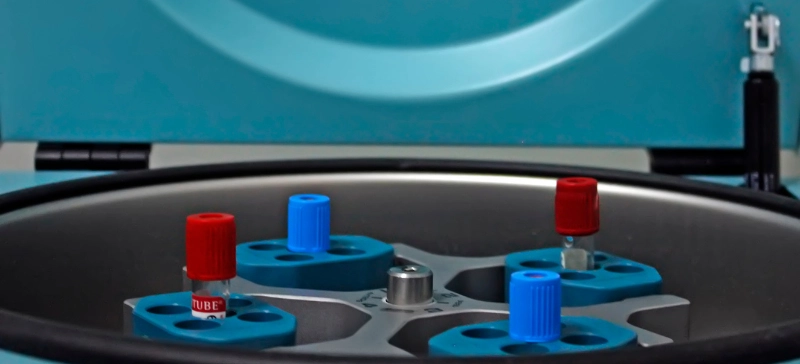
In centrifuge machines, centrifugal force is generated by rapidly rotating a sample, causing the denser components to move outward and settle at the bottom of the container, while less dense materials are pushed toward the center. This force is critical for applications that require high-speed separation of components based on density.
3. How Centrifugal Force Works in Centrifuge Machines
Centrifuge machines work by utilizing centrifugal force to separate materials. When a sample is spun at high speeds, the force pushes particles of different densities to separate. The key factors influencing the effectiveness of centrifugal force in centrifuge machines are:
-
Speed of Rotation (RPM)
Higher RPM produces greater centrifugal force, leading to faster separation.
-
Rotor Design
The rotor’s design (e.g., fixed-angle or swinging bucket) determines how the samples are placed and how effectively the force is distributed.
-
Sample Volume and Type
Larger volumes and different sample types may require specific rotors and speeds to achieve optimal separation.
By controlling these factors, centrifuge machines can effectively isolate specific components like cells, proteins, or other particles.
4. Applications of Centrifugal Force in Centrifuge Machines
Centrifuge machines have widespread applications across various industries, utilizing the principles of centrifugal force for precise separation. Some key applications include:
Laboratory and Medical Applications
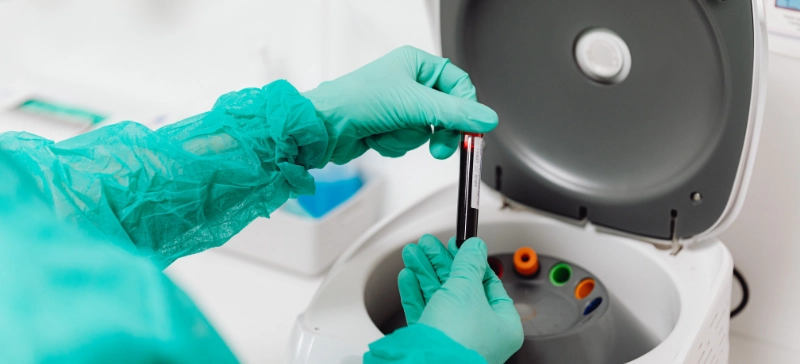
In laboratories, technicians use centrifuge machines to separate blood components, isolate DNA and proteins, and prepare samples for further analysis. Clinical labs rely on them to analyze patient samples by efficiently separating blood cells and plasma.
Industrial Applications
Industries such as food processing, pharmaceutical manufacturing, and wastewater treatment also use centrifuge machines. For example, the dairy industry uses them to separate cream from milk, and wastewater management uses them to remove solid particles from liquids.
Biotechnology
In biotechnology, researchers rely on centrifuges for cell culture applications and for isolating microalgae or other biological materials. They process large volumes efficiently, ensuring purity and quality in the final product.
5. Centrifugal Force vs. Centripetal Force
Centrifugal and centripetal forces are often discussed together. While centrifugal force is the apparent outward force observed from a rotating frame of reference, centripetal force is the actual force that keeps objects moving in a circular path, directed toward the center of rotation.
In a centrifuge machine, both forces are at play:
-
Centripetal Force
Keeps the sample within the rotor during high-speed rotation, ensuring that the sample follows a circular path.
-
Centrifugal Force
Causes the particles within the sample to move outward, separating them based on density.
The interaction between these two forces is crucial for the effective operation of centrifuge machines, as they enable the separation of particles according to their mass and density.
6. Centrifugal Machines: Key Features and Benefits
Centrifugal machines, such as centrifuges, are essential tools for separation tasks in laboratories and industries. Some of the key features of these machines include:
-
High-Speed Performance
-
Centrifuge machines can operate at high speeds (thousands of RPM), creating sufficient centrifugal force to achieve quick and efficient separation.
-
Precision and Versatility
-
With adjustable speed and rotor settings, centrifuge machines offer precision in separating components from various sample types, from blood to chemicals.
-
Safety and Reliability
-
Modern centrifuge machines are designed with safety features such as locked rotors and secure lids to prevent accidents during operation. Additionally, they offer reliability and consistency in sample separation.
7. Centrifuge Machines and Their Role in Various Industries
Centrifuge machines are indispensable in several sectors, providing highly effective separation capabilities. Some notable industries that rely on centrifuges include:
-
Medical and Clinical Labs
-
Centrifuges play a crucial role in blood testing and other diagnostic applications. They enable the rapid separation of blood components like red blood cells, white blood cells, and plasma, facilitating accurate medical analysis.
-
Pharmaceutical Industry
-
In the pharmaceutical sector, centrifuges are used to isolate compounds, purify proteins, and perform research on new drugs or treatments.
-
Environmental Applications
-
In environmental science, centrifuges help in wastewater treatment by separating solid waste from liquids. They also assist in the processing of hazardous materials or separating contaminants from industrial waste.
8. Related Centrifuge Products by Aelab
Aelab Centrifuge Products
- Low Speed Centrifuge AE-LSC Series
Ideal for clinical and medical laboratories, the AE-LSC series separates serum, plasma, urine, and fecal samples. With a speed range of 300-4000rpm, it features a maintenance-free brushless DC motor and easy-to-use programmable settings. - High Speed Mini Centrifuge AE-MC-15
A compact high-speed centrifuge offering a maximum speed of 15,000 rpm and a maximum RCF of 15,100×g. It is equipped with an LCD display, precise speed control, and advanced safety features for reliable and quiet operation. - Mini-Plate Centrifuge MPC-22
Designed for PCR and Elisa applications, this centrifuge quickly spins down droplets and condensation. It accommodates up to 2 PCR plates or 8 PCR strip tubes, offering a speed of 2200 rpm and a g-force of 480×g.
Aelab offers a range of other centrifuges designed to meet various laboratory needs, ensuring efficient and high-quality results in both clinical and scientific settings.
High Speed Mini Centrifuge D2012 Plus
Low Speed Centrifuge AE-LSC Series
9. Conclusion
Centrifugal force is a powerful concept that plays a fundamental role in the operation of centrifuge machines. These machines are vital tools in both scientific research and industrial processes, enabling the effective separation of materials based on their density. By understanding the principles of centrifugal force and its application in centrifuge machines, industries can optimize their processes, improve efficiency, and achieve high-quality results.