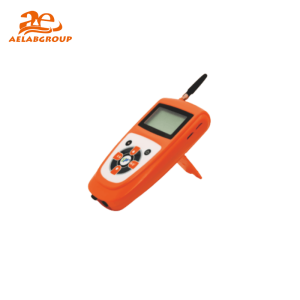
AELAB | Agricultural Testing Instruments | Plant Canopy Analyzer
The Laboratory Plant Canopy Analyzer is a precision instrument that quantifies canopy structure, light interception, and photosynthetic efficiency in plants. By transforming complex leaf arrangements into measurable data, it enables scientists and agronomists to better understand crop performance, growth dynamics, and yield potential in controlled environments.
A Laboratory Plant Canopy Analyzer measures structural and optical characteristics of plant canopies, including Leaf Area Index (LAI), canopy coverage, and fraction of absorbed photosynthetically active radiation (fPAR). Designed for laboratory or greenhouse conditions, it uses optical sensors and radiation modeling to assess how light interacts with leaves, offering high-precision, non-destructive canopy evaluation.
| Feature | Details |
|---|---|
| Measurement Parameters | Leaf Area Index (LAI), fPAR, canopy cover, light transmission |
| Sensor Type | PAR and near-infrared optical sensors |
| Data Output | Digital display and USB/Bluetooth data export |
| Measurement Range | 0.1–8.0 LAI units depending on species and setup |
| Accuracy | ±3% under stable lighting conditions |
| Operating Environment | Greenhouses, growth chambers, indoor research labs |
| Power Supply | Rechargeable battery or USB power |
| Software Compatibility | PC/mobile software for canopy modeling and data logging |
| Feature | Laboratory Canopy Analyzer | Field Canopy Analyzer |
|---|---|---|
| Environment | Controlled (greenhouse/lab) | Outdoor/open-field |
| Light Conditions | Artificial or stabilized lighting | Natural sunlight |
| Accuracy | Very high (minimal interference) | Medium to high (weather-dependent) |
| Portability | High (compact instruments) | High (rugged outdoor design) |
| Primary Use | Research trials, phenotyping, controlled studies | Field surveys, forestry, agronomy |
Q: What does a Plant Canopy Analyzer measure?
A: It measures key parameters like Leaf Area Index (LAI), canopy cover, and fPAR to assess light distribution and photosynthetic efficiency.
Q: How is a laboratory canopy analyzer different from a field model?
A: Laboratory versions are optimized for controlled environments, offering higher precision and stability compared to field units exposed to variable lighting and weather.
Q: What are the main outputs from canopy analysis?
A: Typical outputs include LAI, fPAR, canopy cover percentage, and light interception ratios — all crucial for growth modeling.
Q: Who uses canopy analyzers?
A: Plant breeders, agronomists, environmental scientists, and academic researchers use them to evaluate crop growth, stress response, and productivity under controlled conditions.
Looking for specific lab equipment? Fill out the form below, and our team will get back to you with detailed information and a personalized quote.