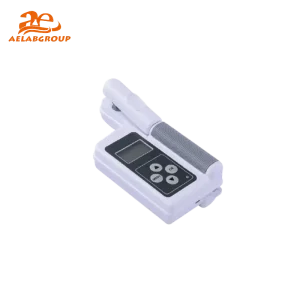
AELAB | Agricultural Testing Instruments | Plant Nutrition Analyzer
A Plant Nutrition Analyzer is revolutionizing precision agriculture by providing instant, data-driven insight into plant nutrient status. Instead of waiting for lab reports, farmers, researchers, and agronomists can measure nutrient levels directly from plant tissues or sap. This tool enables real-time nutrient management, helping to optimize growth, improve yield, and reduce fertilizer waste across diverse growing systems.
A Plant Nutrition Analyzer is a portable or benchtop device designed to measure essential nutrient concentrations—such as nitrogen (N), phosphorus (P), potassium (K), calcium (Ca), magnesium (Mg), and micronutrients like iron (Fe) and zinc (Zn)—in plant tissues, leaves, or sap. It identifies deficiencies or toxicities to guide fertilizer application and improve plant health. In short: a plant nutrition analyzer measures nutrient levels in plants using optical, electrochemical, or spectroscopic sensors to help growers optimize yield and nutrient balance.
| Feature | Details |
|---|---|
| Measurement Parameters | Macro- and micronutrients (N, P, K, Ca, Mg, Fe, Zn, Mn, Cu, B) |
| Technology | Optical, electrochemical, or spectroscopy-based sensors (NIR/XRF) |
| Sample Type | Leaf tissue or plant sap |
| Response Time | Within minutes for real-time decisions |
| Data Storage & Connectivity | USB, Bluetooth, or cloud-enabled data transfer |
| User Interface | Touchscreen or app-based control with multilingual menus |
| Calibration | Manual or automatic calibration by crop type |
| Power Source | Rechargeable battery or AC power adapter |
| Feature | Plant Nutrition Analyzer | Lab-Based Nutrient Analysis |
|---|---|---|
| Turnaround Time | Instant (within minutes) | Slow (days to weeks) |
| Sample Requirement | Minimal; often non-destructive | Large, destructive sample |
| Portability | Portable and field-ready | Stationary (requires lab) |
| Accuracy | High with calibration | Very high, reference-grade |
| Cost per Test | Low after device investment | Moderate to high |
Q: What nutrients can a Plant Nutrition Analyzer detect?
A: Most devices measure macronutrients like nitrogen, phosphorus, and potassium, as well as micronutrients such as iron, zinc, manganese, and copper.
Q: Do I still need laboratory analysis?
A: Not for routine checks—Plant Nutrition Analyzers provide on-site results instantly. However, lab tests may still be needed for detailed chemical analysis or calibration reference.
Q: Is it suitable for all crops?
A: Yes, but calibration may differ by crop type or leaf texture. Always choose models with flexible calibration settings for multi-crop use.
Q: How often should the device be calibrated?
A: Regularly—especially before a new testing season or when switching plant species—to ensure consistent accuracy.
Q: Can the analyzer help reduce fertilizer waste?
A: Absolutely. Real-time nutrient monitoring allows targeted fertilizer application, cutting unnecessary costs and minimizing environmental impact.
Looking for specific lab equipment? Fill out the form below, and our team will get back to you with detailed information and a personalized quote.