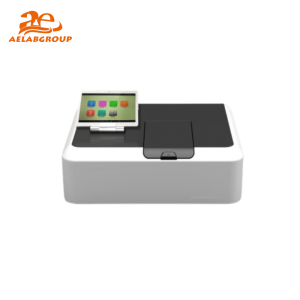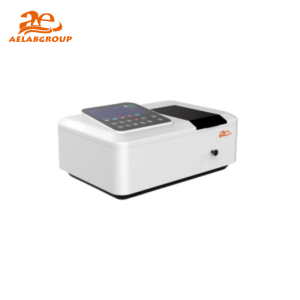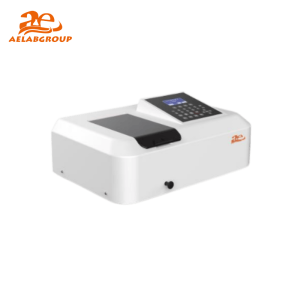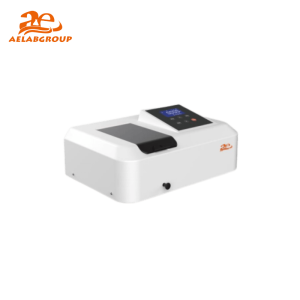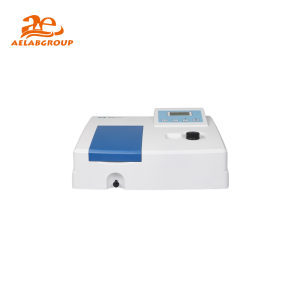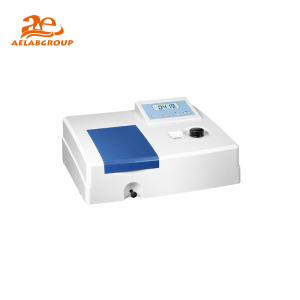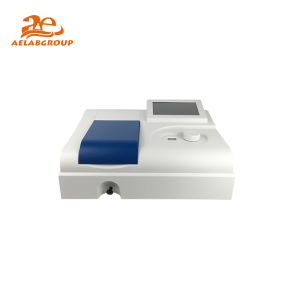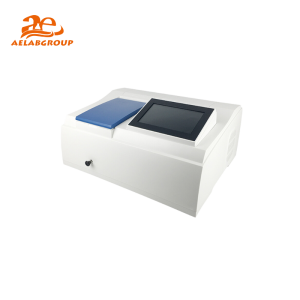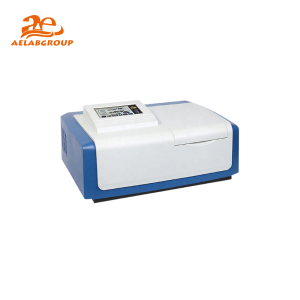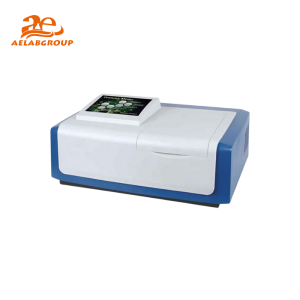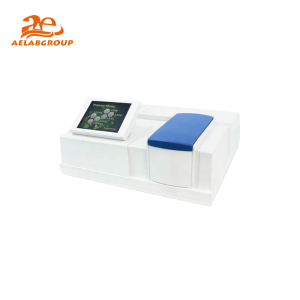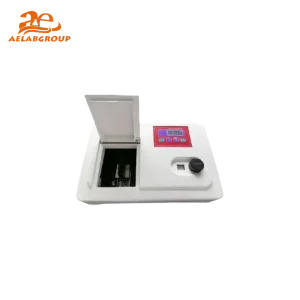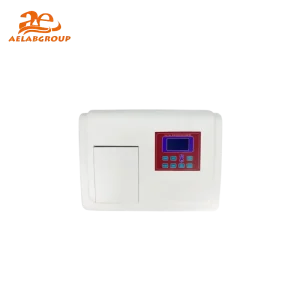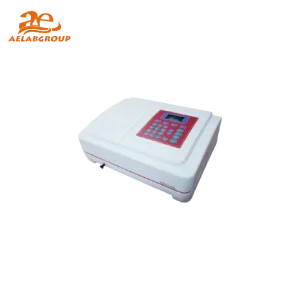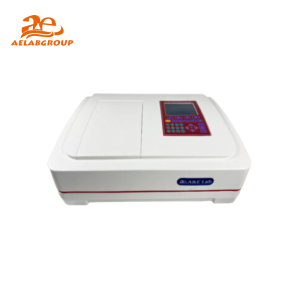
AELAB | Analytical Equipment | UV-VIS Spectrophotometer
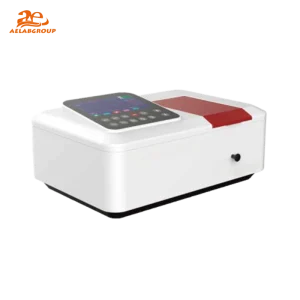
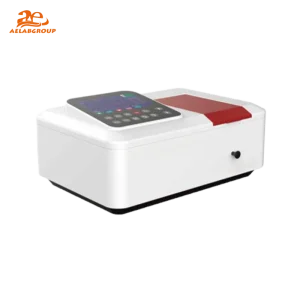
A UV-VIS spectrophotometer measures absorbance and transmittance in the ultraviolet and visible ranges to support qualitative and quantitative analysis. It is widely used across pharmaceuticals, environmental science, chemistry, and life sciences for rapid, non-destructive measurements. This guide outlines fundamentals, key specifications, advantages, limitations, and expert usage tips.
A UV-VIS spectrophotometer quantifies how much light a sample absorbs across 190–700 nm (and in some models up to ~1100 nm). Operating under Beer–Lambert’s law, it correlates absorbance to concentration, enabling routine assays, reaction monitoring, and material characterization with minimal sample preparation.
| Feature | Details |
|---|---|
| Wavelength Range | UV: 190–400 nm; VIS: 400–700 nm; some models extend to NIR ~700–1100 nm |
| Light Source | Deuterium (UV), Tungsten-Halogen (VIS/NIR), or Xenon for broad spectrum/longer life |
| Spectral Bandwidth | Typical options: 0.5 nm, 1 nm, 2 nm (resolution trade-off vs. throughput) |
| Detectors | Photodiode Array (fast scanning), Silicon photodiodes, CCD in high-end systems |
| Stray Light | Low stray light (<0.05%) improves accuracy at high absorbance |
| Scanning Speed | ~10 nm/min to >4000 nm/min (supports high-throughput workflows) |
| Sample Interface | Standard 10 mm cuvettes; microvolume, flow cells, or temperature-controlled holders as options |
| Photometric Range/Linearity | Supports typical 0–3 A with linear response within instrument limits |
| Aspect | Laboratory UV-VIS Spectrophotometer | FT-IR Spectrometer |
|---|---|---|
| Principle | Absorbance of UV/VIS photons; Beer–Lambert’s law | Molecular vibrations; IR absorption fingerprints |
| Best Use | Quantitation, kinetics, colorimetric assays | Identification of functional groups/materials |
| Sample Prep | Liquids/solutions in cuvettes; minimal prep | ATR/transmission; solids, liquids, gases; minimal prep |
| Speed | Fast scanning; high throughput | Rapid spectra (~1–2 min) for ID |
| Cost | Moderate | Higher |
Q: What wavelength range do most UV-VIS spectrophotometers cover?
A: Typically 190–700 nm, with some models extending into the near-infrared up to ~1100 nm.
Q: How does stray light affect results?
A: Excess stray light reduces accuracy at high absorbance values; choosing instruments with <0.05% stray light and keeping optics clean improves precision.
Q: Which light source should I choose?
A: Deuterium and tungsten-halogen lamps cover UV and VIS respectively; xenon offers broad coverage and long life—select based on stability, lifetime, and assay needs.
Q: Can turbid or colored samples be measured reliably?
A: Turbidity and strong color can scatter or absorb light and bias readings; clarify or dilute samples and use appropriate blanks to maintain accuracy.
Looking for specific lab equipment? Fill out the form below, and our team will get back to you with detailed information and a personalized quote.