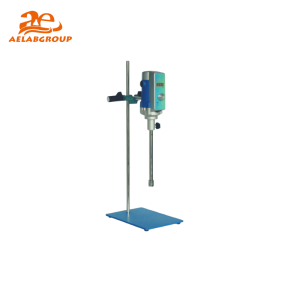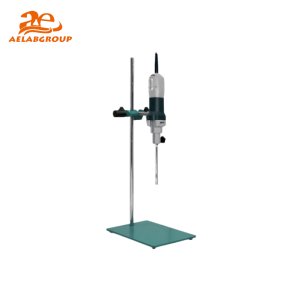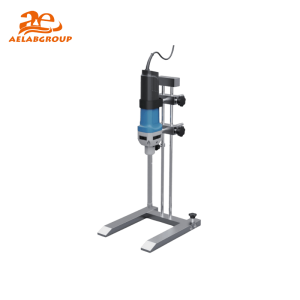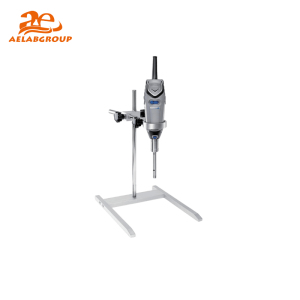
AELAB | Laboratory Equipment | Homogenizer/Grinder/Blender
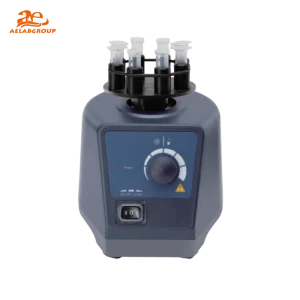
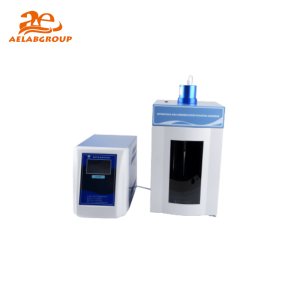
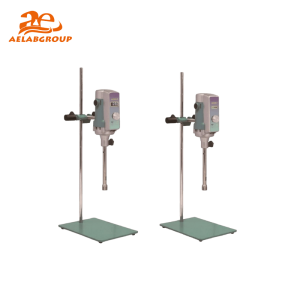
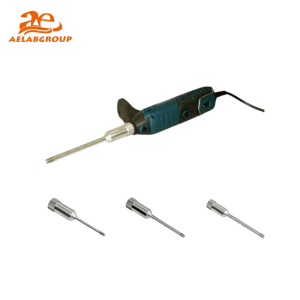
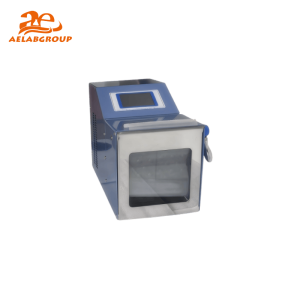
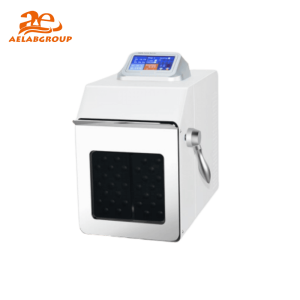
The Homogenizer/Grinder is an essential laboratory tool for efficient sample preparation. By breaking down and blending solids, tissues, or semi-solid materials into uniform mixtures, it ensures consistency, accuracy, and reproducibility across diverse analytical and research workflows in food, pharmaceutical, biotech, and environmental labs.
A homogenizer/grinder is a scientific instrument that reduces particle size and creates uniform dispersions through mechanical or ultrasonic forces. It combines grinding and homogenizing functions to process both soft and hard samples for analytical testing or molecular extraction. These devices may be manual, semi-automatic, or automated and are critical in ensuring representative, contamination-free samples.
| Feature | Details |
|---|---|
| Operating Principle | Mechanical shear, impact, or ultrasonic cavitation |
| Speed Range | 500–30,000 rpm (depending on model) |
| Sample Volume | From microliters up to several liters |
| Material Compatibility | Soft tissue, plant material, food, soil, or polymers |
| Control Mode | Manual, semi-automatic, or fully programmable |
| Noise Level | Typically <70 dB (varies by type) |
| Safety Features | Sealed systems, overload protection, soundproofing |
| Power Supply | AC 110–240V, 50/60Hz |
| Aspect | Homogenizer/Grinder | Mortar & Pestle | Blender |
|---|---|---|---|
| Efficiency | High | Low | Medium |
| Reproducibility | Excellent | Poor | Fair |
| Contamination Risk | Low (sealed systems) | High | Medium |
| Processing Time | Fast | Slow | Moderate |
| Ideal Use | Precision sample preparation | Basic manual grinding | General mixing or food prep |
Q: Can a homogenizer replace a blender?
A: Partially. While both mix and break down materials, homogenizers provide greater precision and consistency for laboratory-grade applications.
Q: What’s the difference between a homogenizer and a grinder?
A: A grinder focuses on particle size reduction, while a homogenizer emphasizes uniform dispersion. Many lab units combine both functions.
Q: Is it safe to homogenize biological samples?
A: Yes, when performed in closed systems or with disposable vessels, homogenization is safe and minimizes contamination risk.
Q: Which homogenizer type is best for DNA/RNA extraction?
A: Ultrasonic and bead mill homogenizers are ideal for molecular and tissue disruption used in nucleic acid extraction.
Looking for specific lab equipment? Fill out the form below, and our team will get back to you with detailed information and a personalized quote.