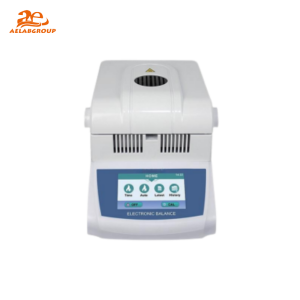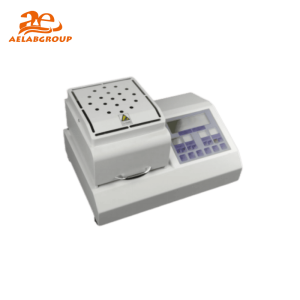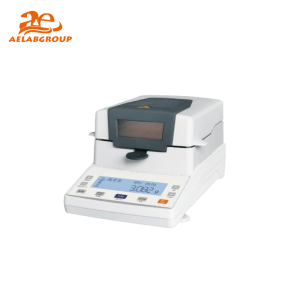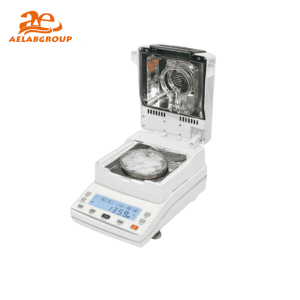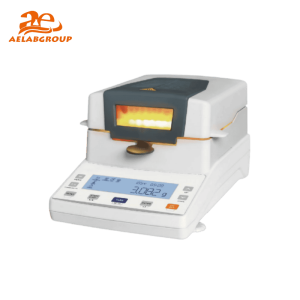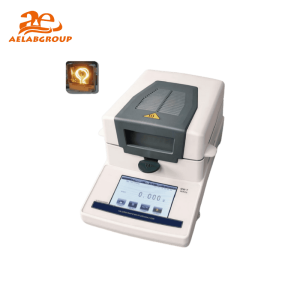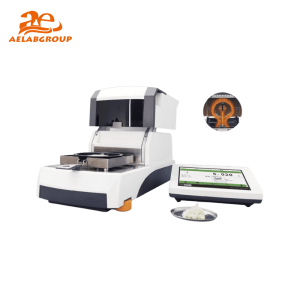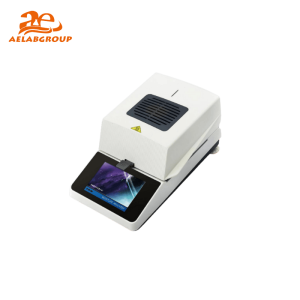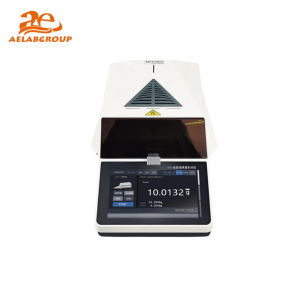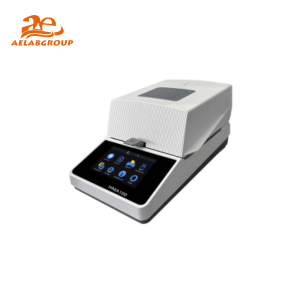
AELAB | Laboratory Equipment | Moisture Analyzer
A moisture analyzer is an essential laboratory and industrial tool for determining moisture content with precision and speed. In industries such as food processing, pharmaceuticals, agriculture, and chemicals, maintaining the correct moisture level ensures product quality, shelf life, and compliance. This guide explores how moisture analyzers work, their key types, technical features, and expert tips for accurate measurements and equipment selection.
A moisture analyzer—also called a moisture balance analyzer—measures the water content in a sample by weighing it, heating it to evaporate moisture, and calculating the weight loss as a percentage. Using thermogravimetric analysis, it offers fast, accurate, and repeatable results, making it indispensable for laboratory quality control and industrial process monitoring.
| Feature | Details |
|---|---|
| Measurement Principle | Thermogravimetric (weight loss on drying) |
| Heating Source | Halogen, infrared, or microwave |
| Temperature Range | 40°C – 200°C (model-dependent) |
| Readability | 0.001 g to 0.01 g |
| Sample Capacity | 30 g – 200 g |
| Display Interface | Digital or touchscreen LCD with programmable modes |
| Connectivity | USB, Ethernet, RS232 for data export |
| Calibration | Automatic temperature and weight calibration |
| Method | Speed | Accuracy | Sample Size | Automation |
|---|---|---|---|---|
| Moisture Analyzer | Fast | High | Small | High |
| Oven Drying | Slow (hours) | High | Medium | Low |
| Karl Fischer Titration | Moderate | Very High | Small | Moderate |
Q: What is the principle behind a moisture analyzer?
A: It measures moisture through thermogravimetric analysis, calculating weight loss after controlled heating and evaporation of water.
Q: What is the most accurate method for moisture determination?
A: Karl Fischer titration provides the highest accuracy, but halogen-based analyzers balance speed and precision for most applications.
Q: Can moisture analyzers handle all sample types?
A: Most handle powders, granules, and liquids; however, heat-sensitive or volatile samples require careful temperature selection or infrared models.
Q: How often should a moisture analyzer be calibrated?
A: For optimal accuracy, calibrate temperature and balance functions every 3–6 months or after heavy use.
Looking for specific lab equipment? Fill out the form below, and our team will get back to you with detailed information and a personalized quote.