AELAB | Laboratory Equipment | Water Distiller
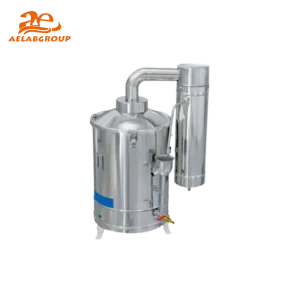
Water distillers are reliable devices for producing ultra-pure water by removing impurities, minerals, and microbes through distillation. Whether for home, laboratory, or medical use, a water distiller ensures consistent water quality. This guide explains how water distillers work, their advantages, and how to choose the best one for your needs.
A water distiller purifies water by heating it into steam, separating impurities, and condensing the steam back into clean liquid. This process removes up to 99.9% of contaminants—including heavy metals, chemicals, and microbes—resulting in safe, distilled water for drinking, medical, and laboratory use.
| Feature | Details |
|---|---|
| Purification Method | Thermal distillation (boil–evaporate–condense cycle) |
| Contaminant Removal | Eliminates up to 99.9% of bacteria, viruses, heavy metals, and dissolved solids |
| Material Construction | Stainless steel body with glass or BPA-free container |
| Production Capacity | 1–12 gallons per day (varies by model) |
| Power Consumption | Approximately 500–750 W per gallon |
| Cooling System | Air- or water-cooled condenser coil |
| Safety Features | Automatic shut-off, overheat protection, sealed steam path |
| Optional Enhancements | Post-carbon filter for taste improvement, automatic refill systems |
| Feature | Water Distiller | Reverse Osmosis | Carbon Filter |
|---|---|---|---|
| Removes Viruses | ✅ Yes | ❌ No | ❌ No |
| Removes Heavy Metals | ✅ Excellent | ✅ Good | ❌ Limited |
| Removes Fluoride | ✅ Yes | ✅ Some | ❌ No |
| Filter Replacement Cost | ❌ None | ✅ Ongoing | ✅ Ongoing |
| Wastewater Produced | ✅ Minimal | ❌ High | ✅ Low |
Q: Is distilled water safe to drink every day?
A: Yes, distilled water is completely safe for daily use, though it lacks minerals found in tap water, which may affect taste.
Q: Does a water distiller remove fluoride?
A: Absolutely. Distillation effectively removes fluoride, unlike carbon filters or most standard filtration systems.
Q: How long does it take to produce distilled water?
A: Most countertop units take about 4–6 hours to produce one gallon of distilled water, depending on power and ambient temperature.
Q: Can distilled water be used for cooking?
A: Yes, distilled water enhances flavor in tea, coffee, soups, and baby food, as it’s free from chlorine and minerals that alter taste.
Looking for specific lab equipment? Fill out the form below, and our team will get back to you with detailed information and a personalized quote.