AELAB | Laboratory Equipment | Whiteness Meter
In industries where visual quality and product consistency are paramount—such as paper, textile, plastic, ceramics, and coatings—even minor color deviations can significantly impact quality control and customer perception. A Whiteness Meter provides objective, reproducible measurements of whiteness, ensuring uniformity and compliance with industry standards. Whether you’re in R&D, production, or quality assurance, mastering the use of this tool can enhance accuracy and efficiency across your workflow.
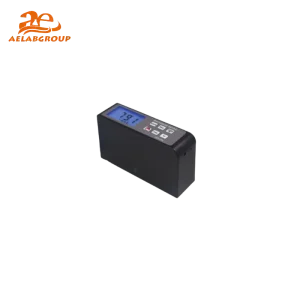
A whiteness meter is a precision optical instrument designed to measure the degree of whiteness on surfaces by analyzing reflected light intensity across specific wavelengths. It quantifies visual whiteness objectively, allowing manufacturers to maintain consistent color standards for products like paper, textiles, plastics, and ceramics.
✅ Featured Snippet Answer:
A whiteness meter is a device that measures the perceived whiteness of surfaces by analyzing light reflectance, helping manufacturers ensure product consistency and visual appeal.
The device projects light—usually from a D65 or A light source—onto a material’s surface. Sensors capture the reflected light intensity, which is processed using standardized formulas to calculate whiteness indices such as:
This allows accurate quantification of whiteness for materials including paper, textiles, detergents, plastics, ceramics, and coatings.
| Feature | Specification |
|---|---|
| Measurement Range | 0 – 120 W units |
| Repeatability | ±0.2 or better |
| Light Source | D65, A light, or LED |
| Display | Digital LCD or touchscreen |
| Portability | Handheld or benchtop models |
| Data Output | USB, Bluetooth, RS232 |
| Compliance | Meets ISO, ASTM, TAPPI standards |
| Industry | Application Example |
|---|---|
| Paper | Measuring brightness and whiteness of print stock |
| Textiles | Assessing fabric whiteness consistency post-dye |
| Plastics | Quality control of plastic containers and films |
| Detergents | Evaluating whitening effect on fabrics |
| Building Materials | Checking tile or ceramic brightness |
| Paints & Coatings | Ensuring pigment dispersion and uniform color |
| Feature | Whiteness Meter | Colorimeter | Gloss Meter |
|---|---|---|---|
| Measures Whiteness | ✅ Yes | ❌ No | ❌ No |
| Measures Color (RGB) | ❌ No | ✅ Yes | ❌ No |
| Measures Gloss | ❌ No | ❌ No | ✅ Yes |
| Typical Use | Paper, Textile, Ceramics | Paints, Printing | Polished surfaces, Plastics |
🧠 Expert Tip: For comprehensive surface evaluation, combine a whiteness meter with a colorimeter and gloss meter.
Q: What units does a whiteness meter use?
A: Most devices use “W” units or the CIE Whiteness Index depending on the chosen formula.
Q: Can I use a colorimeter instead of a whiteness meter?
A: No. A colorimeter measures RGB color values, not whiteness or brightness levels.
Q: Is whiteness the same as brightness?
A: Not exactly. Brightness refers to reflected light at a single wavelength, while whiteness accounts for color tone and full-spectrum reflectance.
Q: How often should a whiteness meter be calibrated?
A: Ideally, before each testing session or daily in high-precision operations.
Looking for specific lab equipment? Fill out the form below, and our team will get back to you with detailed information and a personalized quote.