AELAB | Pharmaceutical Equipments | Abbe Refractometer
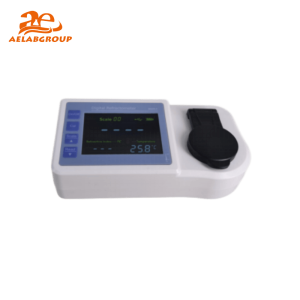
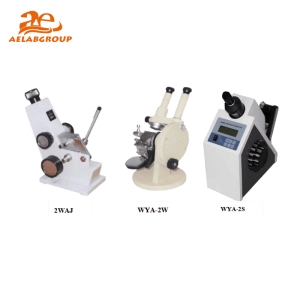
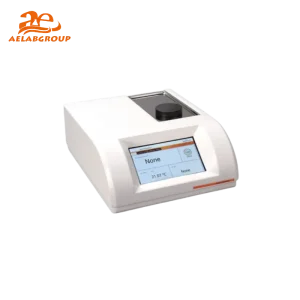
An Abbe Refractometer is a precision lab refractometer used for refractive index measurement and Brix analysis across research, QC, and food industries. Trusted for quick, accurate results, the Abbe Refractometer supports both liquids and transparent solids with excellent repeatability.
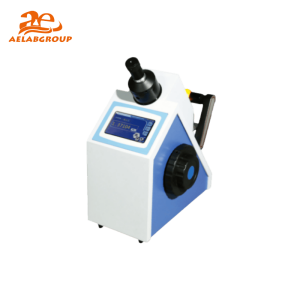
An Abbe refractometer is an optical instrument (originating from Ernst Abbe’s design) that determines a sample’s refractive index by applying Snell’s Law to light passing through a prism-sample interface. Core components typically include a prism assembly for sample placement, a light source (white light or LED), a viewing system or digital display, and thermostatic control to stabilize temperature for accurate readings.
| Feature | Details |
|---|---|
| Measurement Principle | Snell’s Law–based refraction at sample–prism interface |
| Accuracy | Up to ±0.0002 RI (model-dependent) |
| Temperature Control | Thermostatic control; best practice at 20 °C; many models offer ATC |
| Measurement Modes | Refractive Index (nD) and Brix (%) conversion |
| Light Source | White light or LED illumination |
| Display/Readout | Telescope/viewfinder scale (manual) or digital display with data logging (digital) |
| Calibration | Distilled water or certified standards; user-adjustable |
| Sample Compatibility | Liquids and transparent solids; not suited for opaque/highly viscous samples |
| Typical Range | Model-dependent; select based on expected RI/Brix of samples |
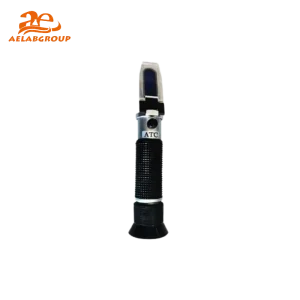
| Aspect | Abbe Refractometer | Handheld Refractometer |
|---|---|---|
| Accuracy | High; suitable for research/QC | Moderate; field screening |
| Sample Types | Liquids & some transparent solids | Primarily liquids |
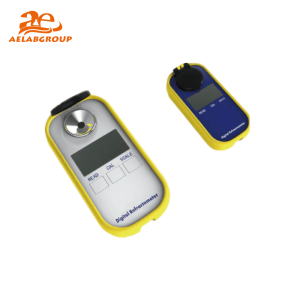
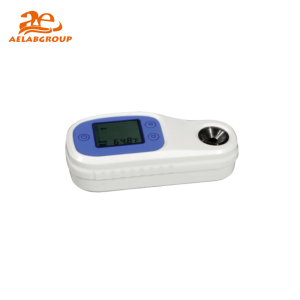
| Portability | Bench-top, stationary | Highly portable |
| Cost | Higher | Lower |
| Temperature Compensation | Common (thermostat/ATC) | Optional/limited |
| Throughput & Data | Digital models support logging & traceability | Usually manual readout |
Q: What does an Abbe refractometer measure?
A: It measures refractive index (nD) and can report Brix (%) for suitable samples, aiding identification and concentration checks.
Q: How accurate is an Abbe refractometer?
A: Modern instruments can reach ±0.0002 RI under controlled temperature and proper calibration.
Q: Can you use an Abbe refractometer for Brix measurements?
A: Yes. Most models convert RI to Brix, widely used in food and beverage quality control.
Q: Why is temperature control important?
A: Refractive index is temperature-sensitive; maintaining ~20 °C or using ATC ensures consistent, accurate readings.
Q: Are opaque or viscous samples suitable?
A: No. Abbe refractometers require clear, well-wetting samples; highly opaque or very viscous materials can compromise accuracy.
Looking for specific lab equipment? Fill out the form below, and our team will get back to you with detailed information and a personalized quote.